
Episode 24
Leadership, loss, and purpose in mental health advocacy, with James Bowler
In this episode of Exception Seekers, Colleen and James explore the evolution of a youth mental health navigation service (MiND-AID Muskoka) that connects young people (ages 0–29) to a wide range of supports beyond traditional counselling, including medical care, housing assistance, food security, and broader social services. The organization focuses on ensuring continuity of care, meaning support doesn’t end at a referral; instead, staff stay engaged until youth are safely and comfortably connected within the system they need.
A central theme is accessibility, particularly in rural communities where mental health resources can be limited or difficult to navigate. MiND-AID addresses this gap through outreach initiatives, including mobile services and community-based engagement, aimed at making support visible, approachable, and easier to access.
The conversation highlights James’s role as board chair, emphasizing hands-on involvement, advocacy, and commitment to strengthening the organization’s impact. His perspective is shaped by both professional experience and personal history, including lived experience with anxiety and depression and a recognition of how fragmented systems can fail young people.
Storytelling emerges as a defining thread throughout the discussion. James reflects on his career in journalism and his belief in the power of giving voice to those who may otherwise go unheard. This extends into his mental health advocacy, where creating safe space for people to share lived experiences is seen as both a responsibility and a skill.
The episode concludes with a reflection on purpose, legacy, and impact, centering not on recognition, but on creating a lasting “ripple effect” of positive change that continues beyond individual involvement.
Important messages
Holistic support is important: youth mental health support must be holistic, addressing housing, food, medical care, and social stability (not just therapy). Sustainable change, especially in rural communities, often comes from small organizations with deep community connection, not just large institutions.
Continuity of care matters: referrals alone are not enough; sustained follow-up can be critical for vulnerable youth.
Lived experiences teach valuable lessons: our experiences can meaningfully inform leadership and advocacy work in mental health spaces. Storytelling is a powerful tool for reducing stigma and amplifying unheard voices. Personal hardship can become a catalyst for purpose-driven leadership and systemic change.
Resources Mentioned
learn more about MiND-AID Muskoka
learn more about James’s production company Northstar Networks
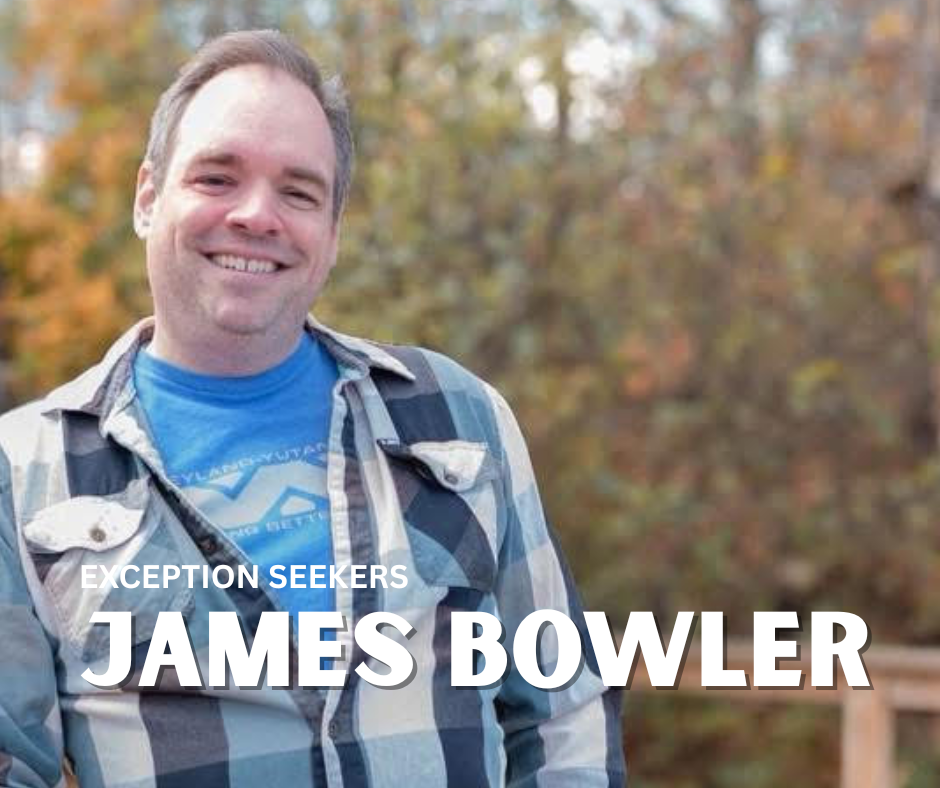
James Bowler (he/him)
James is a community-focused journalist who has been living in Muskoka for over a decade, all the while telling the stories of the local people. James also recently started a podcast production company, Northstar Networks, which is focused on elevating forward-thinking voices in the community through various ways of podcasting, be it general interest conversations, scripted series or promoting local entrepreneurs. James has also had a keen interest in support community well-being in Muskoka by either serving on or working alongside boards focused on youth mental health, childcare, sexual assault support and Indigenous advocacy. James was diagnosed with ADHD at an early age and has spent his adult years advocating for better understanding and support for the neurodivergent community that he is a part of.

Exception Seekers is edited and produced by North Star Networks